
Donations Netherlands
FWIW, I have found Doctors Without Borders a great non-profit that directly aids refugees and they are doing so now on the Ukrainian border.
To help Ukraine look at this:
Franklin Graham’s (son of Billy Graham)

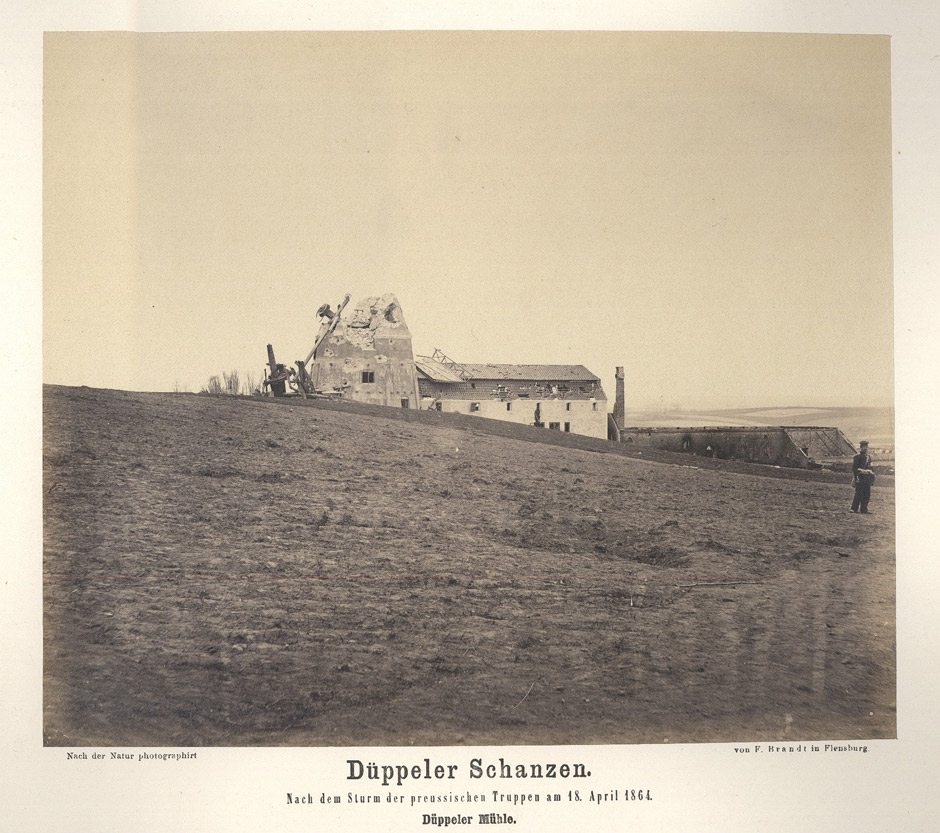

Where and what is that photo from?
It is the mill that you see in the first photo - a Danish National Symbol -
The mill was the center of fierce fighting in the Schleswig wars: 1848-1849 and 1864. The mill was destroyed both times, but rebuilt.
In 1848, an observation post for the Danish military was set up in the mill. In Dybbøl parish, Danish and Prussian troops faced each other before the battles on 5 June 1848.
On April 13, 1849, the mill burned during battles between Danish troops and a Prussian force of 11,000 men, who tried in vain to transfer to Als. The mill was not rebuilt until 1853.
1864 the Danish military establishes an observation and signal post in Dybbøl Mill. With the help of the wings, it is possible to signal to the Danish troops that are accommodated on Als. From March 15, the mill was under constant fire, and on April 10, the mill was set on fire by Prussian troops. The mill cap and wings burned and the shaft crashed. The storm at Dybbøl had the mill in the center.
Shortly after April 18, 1864, the mill was rebuilt.
After 1864, the mill and the ramparts became a national symbol. The fortifications have now been reconstructed in connection with Historiecenter Dybbøl Banke west of the mill, which tells about the battles.
The German minority in North Schleswig or Southern Jutland (German: deutsche Minderheit or deutsche Volksgruppe in Nordschleswig) is the term for the German-minded in North Schleswig (the Danish part of Southern Jutland). From the Danish side and sometimes by the minority themselves, they are also called home Germans. It is estimated that between 15,000 and 18,000 people today are linked to the minority. [1] Of the German North Schleswigs, about two thirds speak Danish (often Southern Jutlandic) as their home language. [2] German remains the cultural language of the minority. The minority forms a parallel to the Danish minority in South Schleswig on the other side of the border. Both minorities are defined as national minorities by mentality, sense of belonging and culture. The minority arose when Sønderjylland / Schleswig was divided by reunification in 1920, and North Schleswig returned to Denmark, but German language and culture have been present in Sønderjylland for centuries.
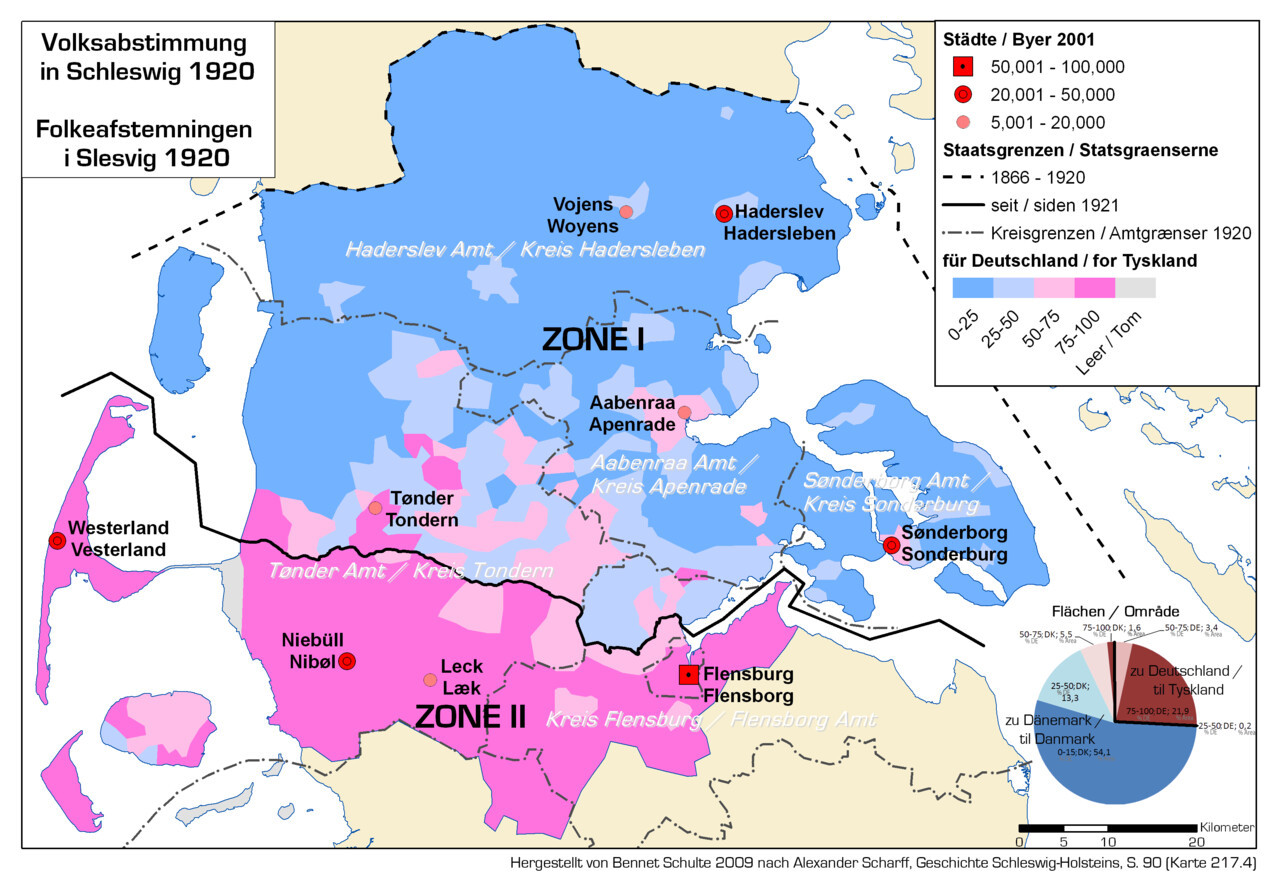
We also have a Danish minority in northern Germany - We are famous for the way our minorities live together after the wars - Many countries could learn something here.
I speak Danish and German because I come from the border country 
Thanks for the great explanation. I am always interested in historical monuments and stories.
I am 4th generation American but my ancestors must have come to America sometime in the 1870’s or so from Eastern Europe. They may have been fleeing that conflict for all I know.
Thanks again
In the first half of the 19th century, a dispute had arisen over whether Schleswig was German or Danish. Linguistically, the area was mixed between German, Danish and Frisian. From a constitutional point of view, the Danish side pointed out that the Duchy of Schleswig was an old Danish county, while the German side opposed all attempts to link Schleswig closer to the kingdom. A division of Schleswig had already been proposed at the time, but was rejected by both the Danish and German movements in Schleswig. [1]
After the war in 1864, the Danish monarchy had to cede the duchies of Schleswig, Holstein and Lauenburg to Prussia and Austria. Schleswig was administered by Prussia, Holstein by Austria. In 1866, war broke out between the two German superpowers. Prussia won the war, and Austria had to relinquish its share of the prey of 1864 at the Prague Peace. Napoleon III of France, however, enacted a provision that the inhabitants of North Schleswig could on occasion be allowed to vote on whether they wanted to belong to Denmark or Prussia. This clause 5 was repealed by Prussia by agreement with Austria in 1879. Thereafter, there was immediately no hope of a change of state affiliation. At the Optant Convention in 1907, Denmark finally recognized this relationship.
In October 1918, Germany’s military defeat in World War I was a reality. That same year, US President Woodrow Wilson presented a 14-point peace plan for Europe. This included, among other things, the principle of the peoples’ right to self-determination, ie. that national minorities should have the right to decide which state they would belong to. The last German government before the German Revolution in November 1918 tried to overcome the border problem by offering a cession of Haderslev County. The Danish government refused on the grounds that it would await a peace agreement. The government had received information from the Danish-minded Member of Parliament in the German Parliament in Berlin, H. P. Hanssen Nørremølle, that a new German government might be willing to give up a major resignation.
[Versailles Peace] (Palace of Versailles - Wikipedia Peace) in [1919] (1919 - Wikipedia) decided that a referendum should be held in Schleswig in two rounds, one in North Schleswig and one in [Middle Schleswig] (Mellemslesvig - Wikipedia, den frie encyklopædi). The German authorities were to evacuate the area south of the Schleswig-Husum line, which, however, only partially took place in the southern part. An International Commission, [Commission Internationale de Surveillance du Plebiscite Schleswig] (https://en.wikipedia.org/wiki/Commission_Internationale_de_Surveillance_du_Plebiscite_Slesvig) (CIS), consisting of members from [France] (https://en.wikipedia.org/ wiki / France), [England] (England - Wikipedia), [Norway] (Norway - Wikipedia) and [Sweden] (https: // /da.wikipedia.org/wiki/Sweden) took over the administration and French troops occupied the area. The International Commission planned and conducted the polls in the two zones.
There were four different categories of eligible voters [2]:
Persons born and resident in the constituency
Persons who were born inside but resided outside the area
Persons who were not born in the area but had lived in the area since before January 1, 1900
Persons who were not born in the area but had lived in it before 1900 and had been deported by the German authorities
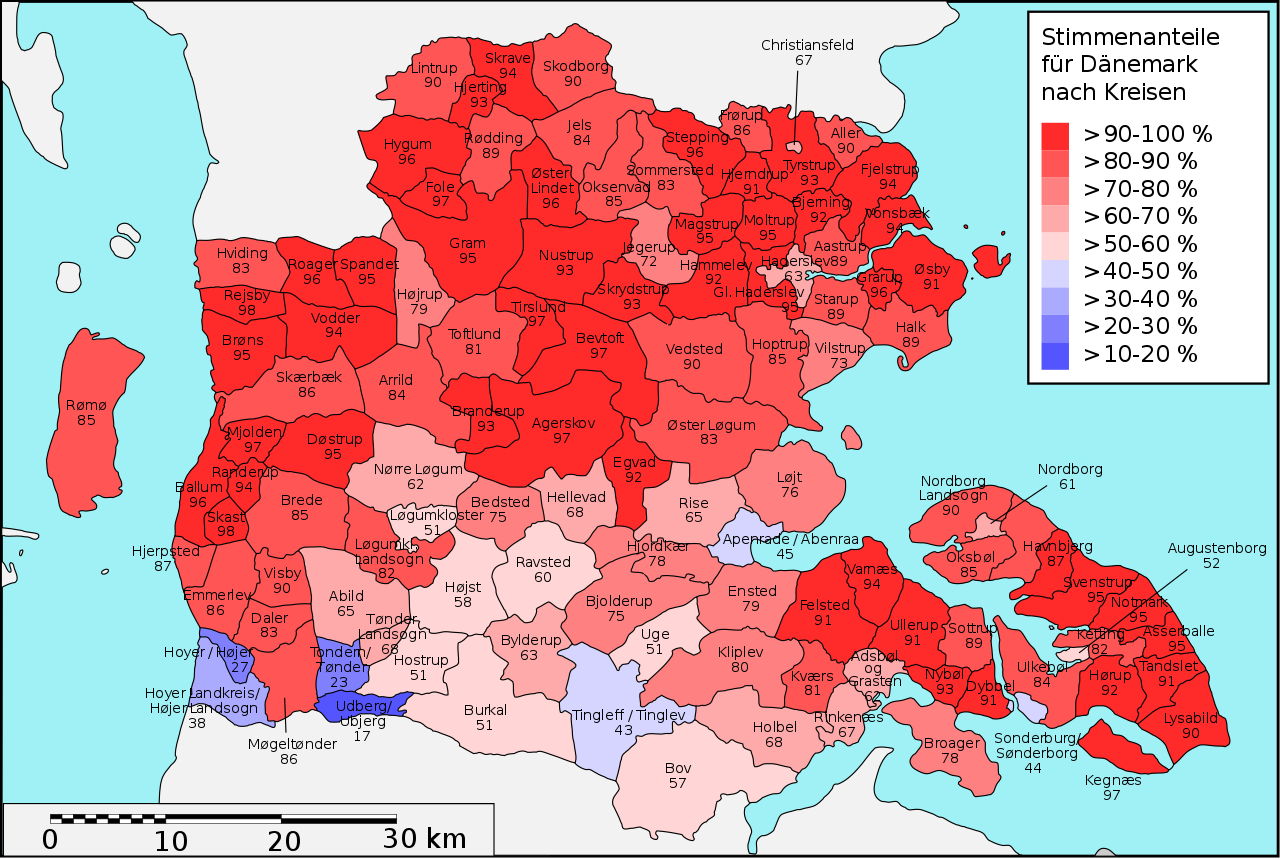
The Danes wanted ballot boxes for each of the four categories, but this was rejected by the CIS. In the market towns, however, it was possible to separate the category of visitors. [2]

In the coming week, companies and individuals in Denmark will send thousands of oar presses to Ukraine with 3D printers.
About 100 3D printers in Denmark are currently printing varicose veins on the loose, says director of Dansk AM Hub Frank R. Lorenzen.
- There is a great shortage of varicose veins in Ukraine because there are many injured and no major storage capacity of varicose veins in Europe, he says.
An arterial press - also known as a tourniquet - is a vital medical tool if you need to stop a bleed - for example after a shot or an explosion. It works by tying something very tight around the leg or arm over the bleeding site, so that you stop or limit the blood loss.
The Danish AM Hub is part of a steering group that tries to activate the 3D printers that are available to both private individuals and companies in Denmark.
Frank R. Lorenzen says that the 100 printers currently produce about 600 oar presses a day.
- The project is only a few days old, and more and more 3D printers are added every day, he says.
Currently, 400 printers in Sweden, Germany and Slovakia also manufacture varicose veins on the loose. Several printers and organizations are coming to the project on an ongoing basis, says Frank R. Lorenzen.
-
We have been contacted by several organizations that would like to provide filament and funds for this project, just as we ourselves have donated filament.
-
Therefore, we also have the opportunity to send filament out to those who want to help print, he says.
Filament is the material that the 3D printer uses to make parts for an oar press.
- If you have the courage to make printing capacity available, you can sign up and find practical info at makershelp.org, says Frank R. Lorenzen.
This is not the first time that the Danish 3D printing environment has stepped in with production power during a crisis.
At the beginning of the corona pandemic, the 3D printing community printed visors and medical equipment for the Danish healthcare system.
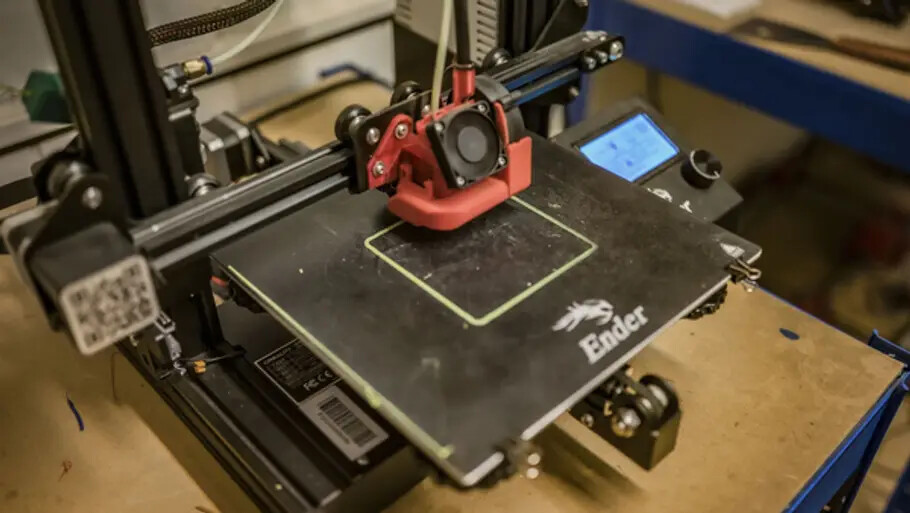
A 3D printer can produce parts for six oar presses a day (Archive photo). Photo: Nano Calvo / Ritzau Scanpix
Organiser 3D print i dit land Organize 3D printing in your country